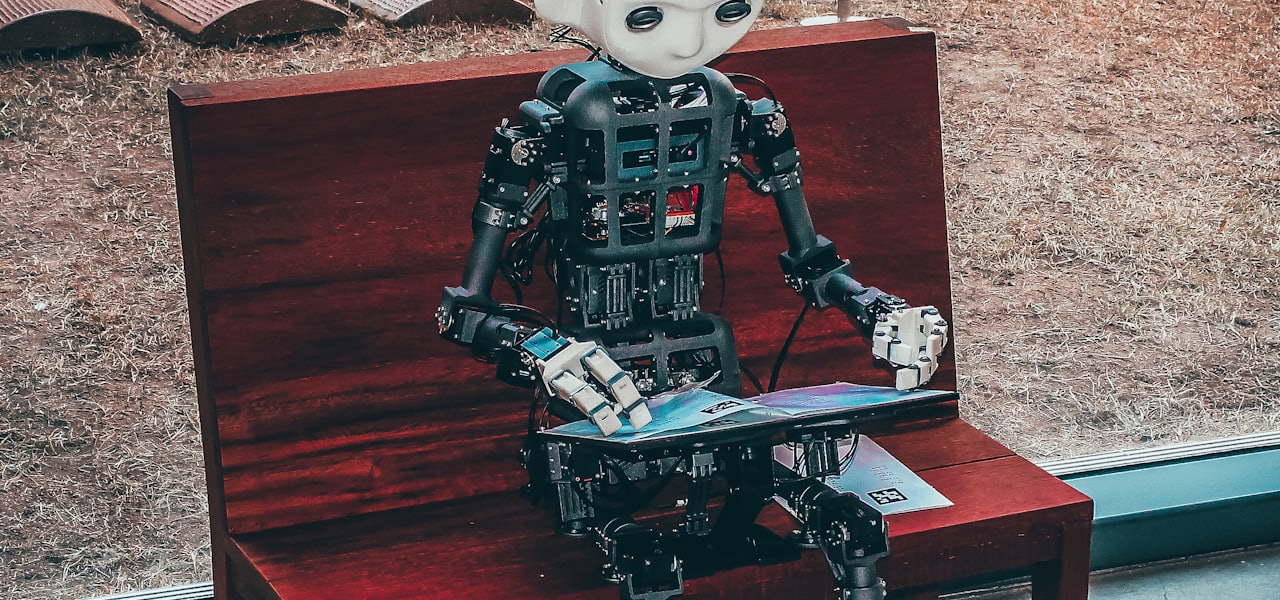
Digital anthropology is the anthropological study of the relationship between humans and digital-era technology. The field is new, and thus has a variety of names with a variety of emphases. These include techno-anthropology, digital ethnography, cyberanthropology, and virtual anthropology. == Definition and scope == Most anthropologists who use the phrase "digital anthropology" are specifically referring to online and Internet technology. The study of humans' relationship to a broader range of technology may fall under other subfields of anthropological study, such as cyborg anthropology. The Digital Anthropology Group (DANG) is classified as an interest group in the American Anthropological Association. DANG's mission includes promoting the use of digital technology as a tool of anthropological research, encouraging anthropologists to share research using digital platforms, and outlining ways for anthropologists to study digital communities. Cyberspace or the "virtual world" itself can serve as a "field" site for anthropologists, allowing the observation, analysis, and interpretation of the sociocultural phenomena springing up and taking place in any interactive space. National and transnational communities, enabled by digital technology, establish a set of social norms, practices, traditions, storied history and associated collective memory, migration periods, internal and external conflicts, potentially subconscious language features and memetic dialects comparable to those of traditional, geographically confined communities. This includes the various communities built around free and open-source software, online platforms such as Facebook, Twitter/X, Instagram, 4chan and Reddit and their respective sub-sites, and politically motivated groups like Anonymous, WikiLeaks, or the Occupy movement. A number of academic anthropologists have conducted traditional ethnographies of virtual worlds, such as Bonnie Nardi's study of World of Warcraft or Tom Boellstorff's study of Second Life. Academic Gabriella Coleman has done ethnographic work on the Debian software community and the Anonymous hacktivist network. Theorist Nancy Mauro-Flude conducts ethnographic field work on computing arts and computer subcultures such as systerserver.net a part of the communities of feminist web servers and the Feminist Internet network. Eitan Y. Wilf examines the intersection of artists' creativity and digital technology and artificial intelligence. Yongming Zhou studied how in China the internet is used to participate in politics. Eve M. Zucker and colleagues study the shift to digital memorialization of mass atrocities and the emergent role of artificial intelligence in these processes. Victoria Bernal conducted ethnographic research on the themes of nationalism and citizenship among Eritreans participating in online political engagement with their homeland. Anthropological research can help designers adapt and improve technology. Australian anthropologist Genevieve Bell did extensive user experience research at Intel that informed the company's approach to its technology, users, and market. == Methodology == === Digital fieldwork === Many digital anthropologists who study online communities use traditional methods of anthropological research. They participate in online communities in order to learn about their customs and worldviews, and back their observations with private interviews, historical research, and quantitative data. Their product is an ethnography, a qualitative description of their experience and analyses. Other anthropologists and social scientists have conducted research that emphasizes data gathered by websites and servers. However, academics often have trouble accessing user data on the same scale as social media corporations like Facebook and data mining companies like Acxiom. In terms of method, there is a disagreement in whether it is possible to conduct research exclusively online or if research will only be complete when the subjects are studied holistically, both online and offline. Tom Boellstorff, who conducted a three-year research as an avatar in the virtual world Second Life, defends the first approach, stating that it is not just possible, but necessary to engage with subjects “in their own terms”. Others, such as Daniel Miller, have argued that an ethnographic research should not exclude learning about the subject's life outside the internet. === Digital technology as a tool of anthropology === The American Anthropological Association offers an online guide for students using digital technology to store and share data. Data can be uploaded to digital databases to be stored, shared, and interpreted. Text and numerical analysis software can help produce metadata, while a codebook may help organize data. == Ethics == Online fieldwork offers new ethical challenges. According to the American Anthropological Association's ethics guidelines, anthropologists researching a community must make sure that all members of that community know they are being studied and have access to data the anthropologist produces. However, many online communities' interactions are publicly available for anyone to read, and may be preserved online for years. Digital anthropologists debate the extent to which lurking in online communities and sifting through public archives is ethical. The Association also asserts that anthropologists' ability to collect and store data at all is "a privilege", and researchers have an ethical duty to store digital data responsibly. This means protecting the identity of participants, sharing data with other anthropologists, and making backup copies of all data. == Prominent figures == Genevieve Bell is an Australian cultural anthropologist credited for pioneering the User Experience field. During her time working for Intel Corporation, Bell studied how various cultures from around the world interacted with and experienced technology. Researching and improving user experience allows companies and designers to gather data regarding how users utilize their digital products and what requires improvement or expansion. Tom Boellstorff is an anthropologist known for Coming of Age in Second Life: An Anthropologist Explores the Virtually Human where he conducted research on how engaging in virtual worlds affects the player’s sense of self. Gabriella Coleman is an American anthropologist concerned with the politics, ethics, and culture of hacking and online activism. Coleman’s most notable ethnography features the hacktivist collective Anonymous, where she argues that various genres of hacking exist according to the social conditions at play. Coleman is dedicated to making her ethnography accessible to a diverse audience, including academics and non-academics. Diana E. Forsythe was an American anthropologist of science and technology and the author of the essays featured in Studying Those Who Study Us: An Anthropologist in the World of Artificial Intelligence. She asked relevant questions such as how should humans interact with computers and how gender roles are maintained in technology-oriented occupations. Heather Horst is a sociocultural anthropologist interested in the relationship between digital social relations and material culture. Nancy Mauro-Flude is a design anthropologist whose work explores the tacit relations between embodied cognition, computational materiality, maker culture, self-hosted webserver cooperatives, creative practice, and artistic research in digital infrastructure and Internet publishing. Mizuko Ito is a Japanese cultural anthropologist specializing in technology use and the intersection between computers and the social sciences. Her primary interest is in how young people utilize media technology and how it can be used to engage students in education. Daniel Miller is an anthropologist with a concentration in digital anthropology. His research includes the smartphone and perpetual opportunism, the intent and consequences of posting on social media in various geographical locations, and how hospice patients use media to socialize in the last stage of their lives. Mike Wesch is a cultural anthropologist interested in how people share their lives, cultures, and beliefs through digital media.
PCPaint
PCPaint was one of the first IBM PC-based mouse-driven GUI paint programs, released in 1984. It followed after Microsoft Doodle, released in 1983 with the Microsoft Mouse version 1 drivers for DOS, and around the same time as Digital Research’s Draw program. It was developed and created by John Bridges and Doug Wolfgram. It was later developed into Pictor Paint. The hardware manufacturer Mouse Systems bundled PCPaint with millions of computer mice that they sold, making PCPaint one of the best-selling DOS-based paint programs of the mid 1980s. == History == In 1983, Doug Wolfgram bought a Microsoft Mouse and decided to write a drawing program for it. They named it “Mouse Draw”. The interface was primitive but the program functioned well. Wolfgram traveled to SoftCon in New Orleans where he demonstrated the program to Mouse Systems. Mouse Systems was developing an optical mouse and they wanted to bundle a painting program so they agreed to publish Mouse Draw. The original program was written entirely in assembly language with primitive graphics routines developed by Wolfgram. John Bridges worked for an educational software company, Classroom Consortia Media, Inc., developing and writing Apple and IBM graphics libraries for CCM's software. Bridges and Wolfgram were friends who had been connected through a bulletin board system developed and run by Wolfgram. The two collaborated cross country via the BBS, Wolfram in California and Bridges in New York. Mouse Systems wanted the paint program to capture the look and feel of MacPaint. John Bridges and Doug Wolfgram started reworking Mouse Draw into what became PCPaint. The program was completely re-written using Bridge's graphics library and the top-level elements were written in C rather than assembly language. Bridges developed the core graphics code for the first version of PCPaint while Wolfgram worked on the user interface and top-level code. Mouse Systems signed an exclusive agreement with Wolfgram's company, Microtex Industries, Inc., to bundle PCPaint with every mouse they sold. They began publishing PCPaint with their mice in 1984. Microsoft responded in 1985 by bundling a competing product, PC Paintbrush, with version 4 of its DOS drivers for the Microsoft Mouse, replacing its in-house Microsoft Doodle program which it published with version 1 of the DOS drivers in mid-1983. Microsoft’s mouse began to outsell Mouse Systems mouse. In November 1985 Microsoft bundled a cut-down version of PC Paintbrush with Windows 1.0 (called Microsoft Paint), later bundling an updated version of PC Paintbrush with Windows 3.0 (as Paintbrush), impacting PCPaint’s marketshare. In early 1987, Mouse Systems decided that PCPaint wasn't helping to sell mice any longer so they discontinued the bundle deal and returned rights to the code to MicroTex Industries, but retained rights to the name, PCPaint. Wolfgram then combined the paint program with a new animation system he was developing (called GRASP) and Paul Mace Software bought publishing rights to the animation system and PCPaint, which was to be renamed Pictor. Bridges again got involved and took over programming responsibilities for GRASP as well as PCPaint while Wolfgram focused on more of the business details. In creating the first version of PCPaint, Doug had a dual-floppy machine with a Computer Innovations compiler on one disk and source code on the other. John had the "luxury" of a 10MB hard disk in his XT. Data was exchanged daily via 1200, then 2400 baud modems. === Authorship and Ownership === John Bridges and Wolfgram continued to work on PCPaint and GRASP on behalf of Paul Mace Software until 1990. Also in that year, Doug Wolfgram sold his remaining rights to PCPaint (and its animation system, GRASP) to John Bridges. In 1994, GRASP development stopped and so did development of Pictor Paint. John Bridges terminated his GRASP publishing contract with Paul Mace Software, and went off to create GLPro (the next generation of GRASP) with GMEDIA. Along with GLPro, came GLPaint, the successor to PCPaint and Pictor Paint. == Versions == In June 1984, Mouse Systems shipped PCPaint 1.0, the first GUI based Paint program for the IBM PC family of computers. John Bridges and Doug Wolfgram, were the co-authors of PCPaint 1.0. PCPaint 1.0 saved its graphics in a modified BSaved image format with the extension of ".PIC". The release of PCPaint Version 1.5 followed in late 1984, with the additions of graphics image compression for the .PIC format and support for "larger-than-screen" images. PCjr support was also added in this version after overcoming severe memory shortage problems getting PCPaint to run on the 128k PCjr. October 1985 saw the release of PCPaint 2.0. EGA support and publishing features were added to this version. The .PIC format was further refined, offering support for the rapidly expanding graphics capabilities of the PC and efficient image compression. PCPaint 3.1 was released in 1989. Unlike previous versions, it was not bundled with mice but was sold as a stand-alone software product. PCPaint 3.1 offered improved text and image handling, provided 36 types of flood and fill, worked with VGA adapters in hi-res 16-color and 256-color modes, allowed the user to save and retrieve files in a variety of intercompatible formats (.PIC, .GIF, .PCX, .IMG), and printed selected portions of images on color or black-and-white dot matrix, ink jet, and laser printers such as PostScript and HP Laser Jet. PCPaint 3.1 is still in use today by some users of DOS emulation programs like DOSBox and available for free download. Pictor Paint was an improved version, written by John Bridges, and bundled with GRASP GRaphical System for Presentation also written by John Bridges. It was also called "The Painter's Easel". GLPaint, released in 1995, was the last in this series of paint programs written by John Bridges. By 1998 version 7.0 provided support for TrueColor images and the Pictor PIC format was expanded to handle these. == Pictor PIC Image Format == PCPaint 1.0 saved its graphics in a modified BSAVE image format (which was popular at the time) with the file type (extension) of ".PIC". By PCPaint 1.5 this format was extended further to accommodate image compression. With the release of version 2.0 the PICtor PIC image format was developed almost to its present state, with no similarity to the BSAVE format used by earlier versions. Pictor Paint saved its files in a compressed format with the file extension PIC, which was the same format used by PCPaint.
Anonymous social media
Anonymous social media is a subcategory of social media wherein the main social function is to share and interact around content and information anonymously on mobile and web-based platforms. Another key aspect of anonymous social media is that content or information posted is not connected with particular online identities or profiles. == Background == Appearing very early on the web as mostly anonymous-confession websites, this genre of social media has evolved into various types and formats of anonymous self-expression. One of the earliest anonymous social media forums was 2channel, which was first introduced online on May 30, 1999, as a Japanese text board forum. With the way digital content is consumed and created continuously changing, the trending shift from web to mobile applications is also affecting anonymous social media. This can be seen as anonymous blogging, or various other format based content platforms such as nameless question and answer online platforms like Ask.fm introduced mobile versions of their services. The number of new networks joining the anonymous social sharing scene continues to grow rapidly. == Degrees of anonymity == Across different forms of anonymous social media there are varying degrees of anonymity. Some applications, such as Librex, require users to sign up for an account, even though their profile is not linked to their posts. While these applications remain anonymous, some of these sites can sync up with the user's contact list or location to develop a context within the social community and help personalize the user's experience, such as Yik Yak or Secret. Other sites, such as 4chan and 2channel, allow for a purer form of anonymity as users are not required to create an account, and posts default to the username of "Anonymous". While users can still be traced through their IP address, there are anonymizing services like I2P or various proxy server services that encrypt a user's identity online by running it through different routers. Secret users must provide a phone number or email when signing up for the service, and their information is encrypted into their posts. Stylometry poses a risk to the anonymity or pseudonymity of social media users, who may be identifiable by writing style; in turn, they may use adversarial stylometry to resist such identification. == Controversy == Apps such as Formspring, Ask, Sarahah, Whisper, and Secret have elicited discussion around the rising popularity of anonymity apps, including debate and anticipation about this social sharing class. As more and more platforms join the league of anonymous social media, there is growing concern about the ethics and morals of anonymous social networking as cases of cyber-bullying, and personal defamation occurs. Formspring, also known as spring.me, and Ask.fm have both been associated with teen suicides as a result of cyberbullying on the sites. Formspring has been associated with at least three teen suicides and Ask.fm with at least five. For instance, the app Secret got shut down due to its escalated use of cyberbullying. The app Yik Yak has also helped to contribute to more cyberbullying situations and, in turn, was blocked on some school networks. Their privacy policy meant that users could not be identified without a subpoena, search warrant, or court order. Another app called After School also sparked controversy for its app design that lets students post any anonymous content. Due to these multiple controversies, the app has been removed from both Apple and Google app stores. As the number of people using these platforms multiplies, unintended uses of the apps have increased, urging popular networks to enact in-app warnings and prohibit the use for middle and high school students. 70% of teens admit to making an effort to conceal their online behavior from their parents. Even Snapchat has some relation to the health of children after using social media. This is an app that is meant to be quick and simple but in many ways it can be overwhelming. A person can post something, and it will be gone in seconds. Oftentimes, the post that was made was inappropriate and harmful to another person. It's a never-ending cycle. Some of these apps have also been criticized for causing chaos in American schools, such as lockdowns and evacuations. In order to limit the havoc caused, anonymous apps are currently removing all abusive and harmful posts. Apps such as Yik Yak, Secret, and Whisper are removing these posts by outsourcing the job of content supervision to oversea surveillance companies. These companies hire a team of individuals to inspect and remove any harmful or abusive posts. Furthermore, algorithms are also used to detect and remove any abusive posts the individuals may have missed. Another method used by the anonymous app named Cloaq to reduce the number of harmful and abusive posts is to limit the number of users that can register during a certain period. Under this system, all contents are still available to the public, but only registered users can post. Other websites such as YouTube have gone on to create new policies regarding anonymity. YouTube now does not allow anonymous comments on videos. Users must have a Google account to like, dislike, comment or reply to comments on videos. Once a sign-in user "likes" a video, it will be added to that user's 'Liked video playlist'. YouTube changed their "Liked video playlist" policy in December 2019, allowing a signed-in user to keep their "Liked video playlist" private. Historically, these controversies and the rise of cyberbullying have been blamed on the anonymous aspect of many social media platforms, but about half of US adult online harassment cases do not involve anonymity, and researchers have found that if targeted harassment exists offline it will also be found online, because online harassment is a reflection of existing prejudices. == As platforms for anonymous discussion == Anonymous social media can be used for political discussion in countries where political opinions opposed to the government are normally suppressed, and allow persons of different genders to communicate freely in cultures where such communication is not generally accepted. In the United States, the 2016 presidential election led to an increase in the use of anonymous social media websites to express political stances. Moreover, anonymous social media can also provide authentic connection to complete anonymous communication. There have been cases where these anonymous platforms have saved individuals from life-threatening situation or spread news about a social cause. Additionally, anonymous social websites also allow internet users to communicate while also safeguarding personal information from criminal actors and corporations that sell users' data. A study in 2017 on the content posted to 4chan's /pol/ board found that the majority of the content was unique, including 70% of the 1 million images included in the studied data set. == Revenue generated by anonymous social media == === Anonymous apps === Generating revenue from anonymous apps has been a discussion for investors. Since little information is collected about the users, it is difficult for anonymous apps to advertise to users. However some apps, such as Whisper, have found a method to overcome this obstacle. They have developed a "keyword-based" approach, where advertisements are shown to users depending on certain words they type. The app Yik Yak has been able to capitalize on the features they provide. Anonymous apps such a Chrends take the approach of using anonymity to provide freedom of speech. Telephony app Burner has regularly been a top grossing utilities app in the iOS and Android app stores using its phone number generation technology. Despite the success of some anonymous apps, there are also apps, such as Secret, which have yet to find a way to generate revenue. The idea of an anonymous app has also caused mixed opinions within investors. Some investors have invested a large sum of money because they see the potential revenue generated within these apps. Other investors have stayed away from investing these apps because they feel these apps bring more harm than good. === Anonymous sites === There are several sources to generate revenue for anonymous social media sites. One source of revenue is by implementing programs such as a premium membership or a gift-exchanging program. Another source of revenue is by merchandising goods and specific usernames to users. In addition, sites such as FMyLife, have implemented a policy where the anonymous site will receive 50% of profit from apps that makes money off it. In terms of advertisements, some anonymous sites have had troubles implementing or attracting them. There are several reasons for this problem. Anonymous sites, such as 4chan, have received few advertisement offers due to some of the contents it generates. Other anonymous sites, such as Reddit, have been ca
IBM Retail Store Systems
This article describes IBM point of sale equipment from 1973 with the introduction of the IBM 3650 till 1986 with the introduction of the IBM 4680. IBM continued to announced new retail products until the sale of the IBM Retail Store Solutions business to Toshiba TEC, announced on 17 April 17 2012. == Background == IBM began selling retail point of sale systems starting in 1973 with the IBM 3650 Retail Store System aimed at department and chain stores and the IBM 3660 Supermarket System designed for supermarkets. The IBM 3650 was announced alongside other IBM vertical industry systems such as the IBM 3600 Finance Communication System, and the IBM 3790 communications system, the combination of which IBM described as a "revolution in terminal based systems". All of these systems relied on a significant number of developments across IBM: New chips: Large Scale Integration allowed advanced Field Effect Transistor logic chips that packed far more transistors onto a new metalized one-inch square ceramic substrate Gas panels: Developed as an alternative to cathode ray tubes, the neon argon gas panel provided clear and flicker-free images. Modem communications: Synchronous Data Link Control provided lower-cost communications over telephone lines New disks: The "Gulliver" disk file that supplied a hard drive smaller than three cubic feet and also the "Igar" diskette drive Smaller printers: A disk printer system called "spica" that used a rotating disk print element with engraved print elements that are struck by a single hammer as the disk rotates Belt printers: A new system, known as "Lynx," using a removable belt that was significantly cheaper, quieter and simpler than earlier chain printers Keyboards: New keyboard technology called "Calico" that could build a wide variety of keyboards using common manufacturing facilities Power supplies: Transistorised Switching Regulators or TsRs: compact power supplies that are one third to one-fourth the size of previous generations === Store Loop (SLOOP) architecture === The 36xx retail terminals are connected to the store controller via a loop also called a Store Loop, similar to that used by the IBM 3600 Finance System. If a terminal detects an error, it runs a self-diagnosis routine, displays an error code to the operator, and uses bypass circuitry to remove itself from the loop and allow the loop to continue operating. If the loop fails, the most downstream terminal transmits an error code to the controller. Intermittent errors are written to disk on the store controller. === Supplies Manufacturing === While IBM's Data Processing Division created the retail store systems, it's Information Record Division (IRD) also saw signifiant opportunity in manufacturing supplies for retail systems. As an example in their Dayton NJ plant they used a high-speed Webtron press to create up to 1 million magnet merchandise tags per shift. == IBM 3650 Retail Store System == The 3650 System is a family of products designed to computerise a retail store, both at the point of sale and for back office store management functions. It includes a method to generate encoded tickets for merchandise, rather than use the Universal Product Code (UPC). The key devices for the system were as follows: === Shop Floor === ==== 3653 Point of Sale Terminal ==== Designed for the store floor, it is a loop attached device with: a wire matrix printer with 3 stations: cash receipt, sales-check and transaction journal. a keyboard with 10 numeric keys and 19 function keys an 8 digit display and description lights. in addition to the 8 digits it also displays the following characters: "$", "." and "-" operator guidance panel with 20 backlit captions status indicators a cash drawer a check verification station. Options include a wand magnet label reader with a 4 foot flexible cord, and locks for the journal tape and the till cover. The terminal effectively loads its software remotely from the 3651 over the loop, which IBM calls an IML (initial microcode load). It can also be IMLed locally using a tape cassette recorder. IBM later offered a choice of OEM Wand Attachments that could be ordered by RPQ that could use OCR or scan UPCs, instead of a wand magnet label reader. Only one wand could be attached to a specific 3653. There are two models: Model 1, which is not programmable. Was announced 10 August 1973. Model P1, which is customer programmable. Has 36 KB of storage expandable to 60 KB. Was announced 13 October 1978. === Back office equipment === ==== 3651 Store Controller ==== Controls data flow inside either a single store or multiple stores and sends retail transactions to a mainframe using a modem. For point of sale it performed functions such as: Automatic price lookup from a master price file Automatic distribution of net sales by up to 54 departments Automatic application of applicable discounts and sales taxes Automatic control of food stamp maximums Check authorization facilities For back office it also helped report preparation such as: store summary individual cashier performance store office reconciliation sales by up to 54 departments Current inquiries for department sales; cashier performance & cash position; store cash position. Inquiries and changes to the master price records and operator authorization control records. Setting the time and date for the internal clock. Running the customer checkouts in training mode. Printing of messages received from the host mainframe Entry of messages to send to the host mainframe Reporting of customer stock returns Updating the system with data received from the mainframe Preparing shelf Labels Basic features include: Each loop attaches up to 63 or 64 terminals depending on traffic volumes and desired response times Has an error and operator panel. There were many models including: A25 Has a 5 MB internal disk. Has 60K of memory expandable to 76KB. Supports one store loop. Attaches to 3275, 3653 and 3663. Announced 19 May 1978, withdrawn 19 February 1981 B25 Same as a A25 with a 9.2 MB internal disk. Announced 19 May 1978 C25 Announced 15 May 1981, withdrawn 15 December 1987 A50 Has a 5 MB internal disk. Announced 5 May 1975. Announced 10 August 1973, withdrawn 15 December 1987 B50 Same as B50 with a 9.2 MB internal disk. Announced 5 May 1975, withdrawn 15 December 1987 A60 Has a 5 MB internal disk. Has an integrated 3669. Attaches up to 24 3663 terminals. Announced 11 October 1973, withdrawn 15 December 1987 B60 Same as A60 with a 9.3 MB internal disk. Announced 17 November 1975, withdrawn 15 December 1987 A75 Has 5 MB internal disk. Has 60K of memory expandable to 124KB. Supports one to three store loops. Attaches to 3275, 3653, 3657, 3784 and 3663 terminals. Announced 19 May 1978 B75 Same as A75 with 9.3 MB internal disk. Announced 19 May 1978, withdrawn 15 December 1987 C75 Same as A75 with 18.6 MB internal disk. Announced 19 May 1978, withdrawn 15 December 1987 D75 Same as A75 with 27.9 MB internal disk. Announced 19 May 1978, withdrawn 15 December 1987 There were also two additional models that could be used instead of the 3651: 7480 Model 1: Has a 18.6 MB internal disk 7480 Model 2: Has a 27.9 MB internal disk ==== 3872 Modem ==== Used to attach to a 3659 for remote loops. Each 3872 can attach three 3659s. ==== 3659 Remote Communication Unit ==== Connected to an IBM 3872 and provides a remote loop for up to 64 point of sale terminals. Announced 10 August 1973, withdrawn 15 December 1987 (Model 2, announced 17 March 1976, withdrawn 20 December 1982) Intended to be used in a back office location like the store manager's office or the data entry office ==== 3275-3 Display Station ==== It is a loop attached display terminal with printer attachment hardware ==== 3784 Line Printer ==== A belt printer for higher-volume end-of-day reporting. The maximum print speed is 155 Ipm using a 48 character set. ==== 3657 Ticket Unit ==== Used to print tickets and encoded labels to attach to store merchandise. It is a loop attached device. It prints the following: 1" by 1" adhesive backed labels with up to 11 characters at 500 tickets per minute. IBM sold these in rolls of 9000 1" x 2" tickets with up to 42 encoded characters and two lines of print of up to 21 characters at 250 tickets per minute. IBM sold these in rolls of 2800 1" x 3" tickets with up to 79 encoded characters and two lines of print of up to 32 characters at 167 tickets per minute. IBM sold these in rolls of 1900 It can also batch read the tickets for validation, separating good tickets from bad ones into two cartridges. Announced 10 August 1973, withdrawn 15 December 1987 ==== 7481 Data Storage Unit ==== This optional unit is used to record transaction data and initialize terminals if the store controller is not available. It uses a built in tape drive to store this data. === Early deployments === The first customer installation of a 3650 was at a Dillard's department store in Little Rock, Arkansas, in late 1974. They placed arou
Digital signal
A digital signal is a signal that represents data as a sequence of discrete values; at any given time it can only take on, at most, one of a finite number of values. This contrasts with an analog signal, which represents continuous values; at any given time it represents a real number within an infinite set of values. Simple digital signals represent information in discrete bands of levels. All levels within a band of values represent the same information state. In most digital circuits, the signal can have two possible valid values; this is called a binary signal or logic signal. They are represented by two voltage bands: one near a reference value (typically termed as ground or zero volts), and the other a value near the supply voltage. These correspond to the two values zero and one (or false and true) of the Boolean domain, so at any given time a binary signal represents one binary digit (bit). Because of this discretization, relatively small changes to the signal levels do not leave the discrete envelope, and as a result are ignored by signal state sensing circuitry. As a result, digital signals have noise immunity; electronic noise, provided it is not too great, will not affect digital circuits, whereas noise always degrades the operation of analog signals to some degree. Digital signals having more than two states are occasionally used; circuitry using such signals is called multivalued logic. For example, signals that can assume three possible states are called three-valued logic. In a digital signal, the physical quantity representing the information may be a variable electric current or voltage, the intensity, phase or polarization of an optical or other electromagnetic field, acoustic pressure, the magnetization of a magnetic storage media, etcetera. Digital signals are used in all digital electronics, notably computing equipment and data transmission. == Definitions == The term digital signal has related definitions in different contexts. === In digital electronics === In digital electronics, a digital signal is a pulse amplitude modulated signal, i.e., a sequence of fixed-width electrical pulses or light pulses, each occupying one of a discrete number of levels of amplitude. A special case is a logic signal or a binary signal, which varies between a low and a high signal level. The pulse trains in digital circuits are typically generated by metal–oxide–semiconductor field-effect transistor (MOSFET) devices, due to their rapid on–off electronic switching speed and large-scale integration (LSI) capability. In contrast, bipolar junction transistors more slowly generate signals resembling sine waves. === In signal processing === In digital signal processing, a digital signal is a representation of a physical signal that is sampled and quantized. A digital signal is an abstraction that is discrete in time and amplitude. The signal's value only exists at regular time intervals, since only the values of the corresponding physical signal at those sampled moments are significant for further digital processing. The digital signal is a sequence of codes drawn from a finite set of values. The digital signal may be stored, processed or transmitted physically as a pulse-code modulation (PCM) signal. === In communications === In digital communications, a digital signal is a continuous-time physical signal, alternating between a discrete number of waveforms, representing a bitstream. The shape of the waveform depends on the transmission scheme, which may be either a line coding scheme allowing baseband transmission; or a digital modulation scheme, allowing passband transmission over long wires or over a limited radio frequency band. Such a carrier-modulated sine wave is considered a digital signal in literature on digital communications and data transmission, but considered as a bit stream converted to an analog signal in specific cases where the signal will be carried over a system meant for analog communication, such as an analog telephone line. In communications, sources of interference are usually present, and noise is frequently a significant problem. The effects of interference are typically minimized by filtering off interfering signals as much as possible and by using data redundancy. The main advantages of digital signals for communications are often considered to be noise immunity, and the ability, in many cases such as with audio and video data, to use data compression to greatly decrease the bandwidth that is required on the communication media. == Logic voltage levels == A waveform that switches representing the two states of a Boolean value (0 and 1, or low and high, or false and true) is referred to as a digital signal or logic signal or binary signal when it is interpreted in terms of only two possible digits. The two states are usually represented by some measurement of an electrical property: Voltage is the most common, but current is used in some logic families. Two ranges of voltages are typically defined for each logic family, which are frequently not directly adjacent. The signal is low when in the low range and high when in the high range, and in between the two ranges the behavior can vary between different types of gates. The clock signal is a special digital signal that is used to synchronize many digital circuits. The image shown can be considered the waveform of a clock signal. Logic changes are triggered either by the rising edge or the falling edge. The rising edge is the transition from a low voltage (level 1 in the diagram) to a high voltage (level 2). The falling edge is the transition from a high voltage to a low one. Although in a highly simplified and idealized model of a digital circuit, we may wish for these transitions to occur instantaneously, no real-world circuit is purely resistive, and therefore no circuit can instantly change voltage levels. This means that during a short, finite transition time, the output may not properly reflect the input, and will not correspond to either a logically high or low voltage. == Modulation == To create a digital signal, a signal must be modulated with a control signal to produce it. The simplest modulation, a type of unipolar encoding, is simply to switch on and off a DC signal so that high voltages represent a '1' and low voltages are '0'. In digital radio schemes, one or more carrier waves are amplitude, frequency or phase modulated by the control signal to produce a digital signal suitable for transmission. Asymmetric Digital Subscriber Line (ADSL) over telephone wires, does not primarily use binary logic; the digital signals for individual carriers are modulated with different-valued logics, depending on the Shannon capacity of the individual channel. == Clocking == Digital signals may be sampled by a clock signal at regular intervals by passing the signal through a flip-flop. When this is done, the input is measured at the clock edge and the signal from that time. The signal is then held steady until the next clock. This process is the basis of synchronous logic. Asynchronous logic also exists, which uses no single clock, and generally operates more quickly, and may use less power, but is significantly harder to design.
NASA AI Assisted-Air Quality Monitoring Project
The NASA Expert-System Ion Trap Mass Spectrometer (ES-ITMS) Project was a public-private partnership to develop an artificial intelligence assisted, air quality monitoring system and was qualified for use on the Space Shuttle. The partnership was also the first cost and intellectual property shared public-partnership implemented by NASA, which used the commercial Research and Development Limited Partnership (RDLP) model that had been adopted by the Reagan Administration for Department of Defense semiconductor development, and recommended for use by NASA for space commercialization. The project partners included NASA, the University of Florida and Finnigan MAT Corporation, was organized and administered by the NASA Joint Enterprise Institute (subsequently NASA Joint Sponsored Program) and ran from 1988 through 1990. The partnership concluded final testing in 1991, generating four patents, expert system software and application protocol reports. The system was space qualified for use on the Shuttle and elements of the ES-ITMS system were integrated into the product Improvements for Finnigan MAT corporation. The success of the partnership lead NASA to create a pilot program to develop partnership business models as an ongoing management practice. == Purpose and objectives == The need to monitor air quality in confined spaces represented an increasing challenge for NASA's planned space missions and private sector facility managers facing the increased scrutiny of possible air contaminants. Up to the early 1980's, air quality monitors generally required large spaces and human technicians to interpret readings. This created a need for miniaturized air quality monitors that could generate reliable and accurate analytic results without on-site technician presence. NASA initiated projects to develop..."mobile and/or portable mass spectrometers" that evaluated the "tradeoff between instrumentation capabilities and space, weight and power considerations." NASA selected a "commercial ITMS instrument capable of generating electron ionization, chemical ionization and mass spectrometry data", to develop a linked expert system to accomplish analysis without human intervention. The commercial instrumentation was from Finnigan MAT corporation while the scientific expertise to support expert system development was available at the University of Florida. The project managers at NASA Ames created a single, integrated project using the RDLP model with objectives to: Develop AI/expert system software for instrument control (NASA's role) Expand sensitivity, selectivity and speed of the spectrometer (Univ Florida role) Expand the spectrometer analytic capability and automate the screening (Finnigan role) == Membership == The partnership included seven specialists from five member organizations: Federal Government National Aeronautics and Space Administration (NASA) NASA Ames Research Center (ARC) NASA Kennedy Space Center (KSC) Commercial Finnigan MAT Corporation (Thermo-Fisher Scientific) TGS Technology, Inc. Research Management University of Florida == Organization, management and administration == The technical project was organized into two development teams, one located in at the NASA Ames Research Center covering expert systems and analytic capabilities and one in Florida covering improved sensitivity and testing. The partnership management and administration was provided by a non-profit, partnership support organization: the Joint Enterprise Institute operating through San Francisco State University Foundation (SFSUF) with a NASA employee liaison, Syed Shariq. == Public-private partnership == The partnership structure was as a prototype test of a pilot NASA program to develop public-private partnership business models. The pilot program was known as the NASA Joint Sponsored Research Program (JSRP), which operated as the NASA Joint Enterprise Institute between 1988 and 1991. The partnership was the first public-private, research and development partnership implemented by NASA in response to national policy shifts to increase technology transfer and space commercialization. The partnership structure included a two year technology development and testing plan that cost $610,000, of which NASA funded $310,000, Finnigan $175,000 and the University of Florida $95,000. == Results and commercialization == The project generated patents (4), software (2) and application protocol reports (8). NASA gained use of the patents and jointly development software while Finnigan received commercial utilization rights. The results were commercialized within eighteen months of project completion. == Recognition == NASA recognized the project as a space qualified instrument. Its achievements were reported to the NASA Administrator, directly leading to establishment of the agency-wide Joint Sponsored Research Program.
Hardware compatibility list
A hardware compatibility list (HCL) is a list of computer hardware (typically including many types of peripheral devices) that is compatible with a particular operating system or device management software. The list contains both whole computer systems and specific hardware elements including motherboards, sound cards, and video cards. In today's world, there is a vast amount of computer hardware in circulation, and many operating systems too. A hardware compatibility list is a database of hardware models and their compatibility with a certain operating system. HCLs can be centrally controlled (one person or team keeps the list of hardware maintained) or user-driven (users submit reviews on hardware they have used). There are many HCLs. Usually, each operating system will have an official HCL on its website.